From Hormuz to the Red Sea, Power Defines Civilization
Ethiopia Must Awaken: From Hormuz to the Red Sea, Power Defines Civilization
By Dr. Aregawi Mebrahtu
Agaezi National Union-ANU, Civilizational Political Framework
Geneva, Switzerland
28 March 2026
Abstract
Contemporary geopolitical discourse surrounding tensions in the Strait of Hormuz is often framed in moral binaries that obscure the underlying dynamics of power. This article critically examines such narratives and advances a strategic perspective grounded in political realism and civilizational analysis. Drawing on international relations theory and historical scholarship, it argues that Ethiopia—conceived as an ancient civilizational state—must move beyond externally imposed frameworks and reassert its strategic position in the Red Sea region. The paper situates this argument within the ideological framework of the Agaezi National Union (ANU), emphasizing sovereignty, geopolitical agency, and the necessity of maritime access.
1. Introduction: the Illusion of Moral Geopolitics
Recent commentary, including that of Peter Koenig, attempts to challenge Western narratives by portraying Iran as a misunderstood actor and the United States and Israel as aggressors. While this critique exposes certain double standards, it ultimately replaces one oversimplification with another. Global politics is not a morality play. It is a contest of power.
The Strait of Hormuz—through which nearly a quarter of the world’s energy supply passes—is not a symbol of goodwill or hostility. It is a strategic lever. Whether Iran charges transit fees or not is secondary. What matters is control.
And control, in geopolitics, is everything.
The framing of global conflicts through the lens of “good” versus “bad” actors remains a persistent feature of contemporary geopolitical discourse. In the case of tensions involving Iran, the United States, and the Strait of Hormuz, this binary obscures the structural realities of power, geography, and strategic interest.
This article challenges such narratives and proposes an alternative analytical framework rooted in realism and civilizational continuity. It further examines the implications of these dynamics for Ethiopia, particularly in relation to its historical and strategic connection to the Red Sea.
2. Theoretical Framework: Power over Morality
Classical realism provides a foundational lens for understanding international politics. As Hans Morgenthau (1948) argues, political action is governed by objective laws rooted in human nature, where interest is defined in terms of power.
Similarly, structural realism emphasizes the anarchic nature of the international system. John Mearsheimer (2001) contends that states operate in a self-help system in which survival depends on the accumulation of power rather than adherence to moral or legal norms.
As John Mearsheimer argues in The Tragedy of Great Power Politics (2001), the international system is anarchic. States survive not through agreements, but through self-help and power accumulation. For Ethiopia, this is a non-negotiable lesson:
- Security cannot be outsourced
- Sovereignty cannot be negotiated
- Survival cannot be delegated.
These perspectives challenge narratives that seek to assign moral superiority to specific actors, highlighting instead the primacy of strategic capability.
3. Strategic Significance of Maritime Chokepoints
The Strait of Hormuz represents one of the most critical nodes in global energy supply chains. According to the International Energy Agency, approximately 20–25% of global oil trade transits through this passage.
Comparisons are often drawn with the Suez Canal and the Panama Canal. However, such comparisons obscure the fundamental distinction between artificial canals and natural straits governed by international maritime law.
The strategic value of these chokepoints lies not in revenue generation but in control and influence over global trade flows.
In the unfolding tensions between Iran, the United States, and the Strait of Hormuz, global discourse is trapped in moral theater—designed not to reveal truth, but to obscure power. For the Agaezi National Union (ANU) and the vision of a Greater Geez Nation, this framing is not merely naïve—it is a strategic failure. Civilizations do not survive by choosing sides in other people’s narratives. They survive by defining their own.
4. Civilizational Geography and Ethiopia’s Strategic Position
The absence of an African perspective in mainstream geopolitical analysis represents a critical gap. Ethiopia, historically connected to maritime trade networks, is today geographically constrained despite its civilizational continuity.
As Fernand Braudel (1980) emphasizes, long-term historical structures—particularly geography—shape the trajectory of civilizations. Ethiopia’s disconnection from the Red Sea thus constitutes not merely an economic limitation but a strategic and civilizational rupture.
The Red Sea region, encompassing actors such as Eritrea and Djibouti, is increasingly central to global trade and military logistics. Ethiopia’s limited access to this space constrains its geopolitical and geoeconomical agency.
While analysts obsess over the Middle East, they consistently ignore a region of equal—if not greater—long-term importance: the Red Sea and the Horn of Africa.
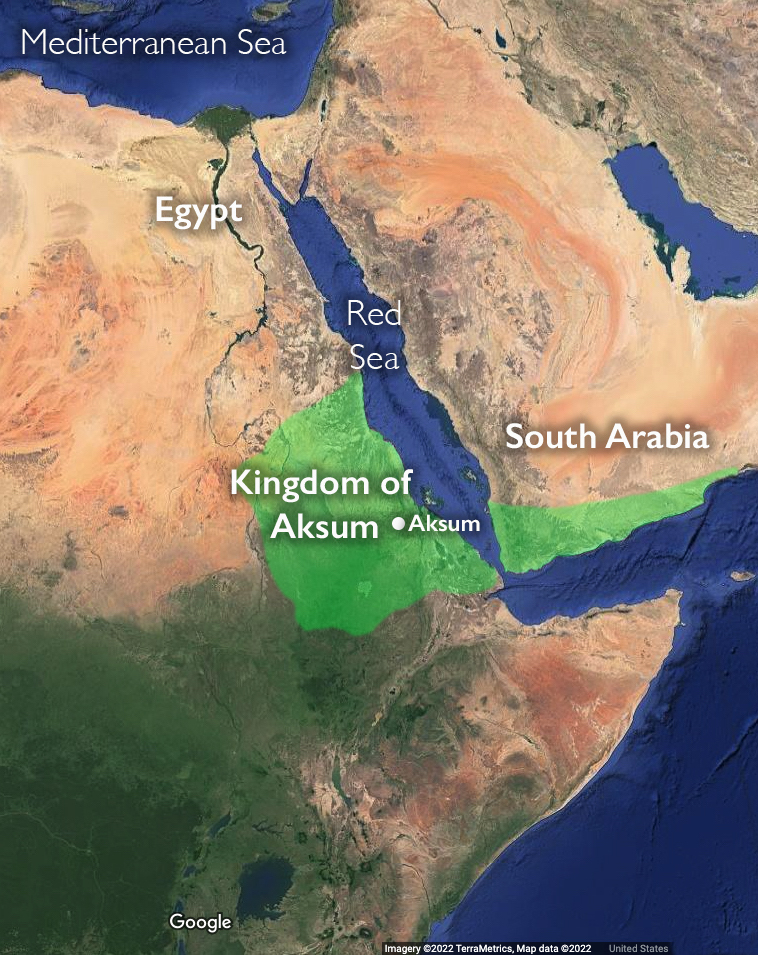
For Ethiopia, this omission is unacceptable. The Red Sea is not merely a trade route. It is a civilizational artery. Historically, Ethiopia was not a landlocked state. It was a maritime civilization, deeply connected to global commerce, culture, and power.
Today, however, Ethiopia finds itself strategically constrained—dependent on external actors for access to global markets. This is not just an economic vulnerability. It is a civilizational contradiction.
The lesson from Hormuz is clear:
1. Nations that control strategic chokepoints shape global outcomes.
2. Nations that do not are shaped by them.
5. Limits of International Norms and Agreements
Debates surrounding nuclear policy, including references to the Treaty on the Non-Proliferation of Nuclear Weapons, illustrate the limitations of international legal frameworks.
While such agreements provide normative guidelines, they do not eliminate the underlying dynamics of power competition. As Mearsheimer (2001) argues, international institutions reflect the interests of powerful states rather than constrain them.
For states such as Ethiopia, reliance on external guarantees is insufficient. Strategic autonomy requires the development of independent capabilities.
Another intellectual trap is the adoption of externally manufactured explanations—whether Western liberal frameworks or reactionary conspiracy theories about global financial control. Both are forms of epistemic dependency.
From an ANU perspective, Ethiopia must develop:
- Independent strategic thought
- Civilizational self-awareness
- Policy rooted in its own historical experience
To think like others is to remain subordinate to them.
6. Toward a Civilizational Strategy: The ANU Perspective
The Agaezi National Union (ANU) articulates a framework centered on civilizational sovereignty and strategic autonomy. This perspective emphasizes:
- Historical Continuity – Recognition of Ethiopia as an ancient and enduring civilizational state; eventually revoking the tribalist and fragmenting ethnic language based nationalism and pseudoconstitution.
- Geopolitical and Geoeconomical Reorientation – Reassertion of presence in the Red Sea system.
- Capability Development – Investment in economic, military, and technological power.
- Regional Leadership – Active shaping of the Greater Horn of Africa’s geopolitical landscape.
This approach aligns with broader theories of civilizational state survival and power projection within an anarchic international system.
Ethiopia’s Strategic Amnesia?
While global analysts debate Hormuz, they ignore a more profound geopolitical truth:
The Red Sea system—adjacent to
- Ethiopia
- Eritrea
- Djibouti
is emerging as one of the defining theaters of 21st-century power. Yet Ethiopia—an ancient maritime civilization—remains strategically paralyzed. This is not an accident. It is the result of historical dislocation and political complacency.
As historian Fernand Braudel emphasized, civilizations are shaped by geography and long-duration structures (la longue durée). A civilization cut off from its natural geographic sphere enters decline. Ethiopia without the Red Sea is not merely landlocked. It is strategically amputated.
7. Discussion
The Iran–Hormuz crisis serves as a case study illustrating the centrality of geography and power in global politics. It underscores the limitations of moral narratives and the necessity of strategic thinking.
For Ethiopia, the implications are clear:
- Strategic marginalization results from geographic and political constraints.
- Re-engagement with maritime systems is essential for long-term stability and growth.
- Civilizational identity must be translated into geopolitical and geoeconomical action.
The Greater Geez Nation by Agaezi National Union is not a slogan. It is a doctrine. It asserts that Ethiopia must:
1. Reclaim Civilizational Continuity: Ethiopia is not a post-colonial construct. It is an ancient state with a continuous identity spanning millennia.
2. Restore Strategic Depth: Access to the Red Sea is not optional. It is an existential requirement.
3. Build Power, Not Dependence: Economic, military, and technological capacity must be developed internally.
4. Reassert Regional Leadership: Ethiopia must shape the Horn of Africa—not react to it.
In fact, we Ethiopians need to ask the right questions such as:
- Who controls strategic resources?
- Who shapes global trade routes?
- Who defines the rules of engagement?
Until Ethiopia answers these questions for itself, it will remain subject to the decisions of others. The Iran–Hormuz crisis is not a distant conflict. It is a mirror. And what it reflects is clear:
1. Power respects power.
- Strategy determines survival.
- Civilizations that fail to act will be acted upon.
For Ethiopia—and for the vision of the Agaezi National Union—the time to move from narrative to strategy is now.
8. Conclusion
The question of “who is the bad actor” in global conflicts is analytically insufficient. A more relevant inquiry concerns the distribution and exercise of power within the international system.
For Ethiopia, the path forward lies in:
- Rejecting externally imposed narratives
- Reclaiming strategic geography
- Building the capabilities necessary for autonomy
In an international system defined by competition, power is not moral positioning, it determines outcomes. The question is not whether Iran, the United States, or any other actor is “good” or “bad.” The question is: Where does Ethiopia stand in the global hierarchy of power?
If Ethiopia continues to:
- Depend on external routes
- Adopt external narratives
- Avoid strategic confrontation
Then it will remain what it is today: a civilization with a past—but no strategic future.
The Agaezi National Union rejects this fate. Ethiopia must rise—not as a participant in global narratives—but as a shaper of them. Because in the end, history remembers only two kinds of nations:
- Those who command the map
- And those who are trapped by it.
Hence, the Iran–Hormuz crisis is not distant. It is a warning. It demonstrates that:
- Strategic geography determines global influence
- Control of trade routes defines economic power
- Military capability underwrites political sovereignty
Ethiopia must draw the correct conclusion: A nation without strategic access is a nation without strategic agency. Control over a chokepoint is not an economic instrument—it is a civilizational weapon. This is why, Agaezi National Union reminds that Ethiopia must:
- Avoid ideological alignment with the eastern or western trends
- Build independent strategic thinking
- Prioritize:
- Red Sea access
- Regional stability
- Civilizational continuity.
References
Braudel, F. (1980). On History. University of Chicago Press.
International Energy Agency. (2023). World Energy Outlook 2023. IEA Publications.
Mearsheimer, J. J. (2001). The Tragedy of Great Power Politics. W.W. Norton & Company.
Morgenthau, H. J. (1948). Politics Among Nations: The Struggle for Power and Peace. Alfred A. Knopf.
United Nations. (1968). Treaty on the Non-Proliferation of Nuclear Weapons (NPT).